Wednesday, October 8, 2014

Pentagram Week, Part 3: Be Forewarned

Released seven years after Day of Reckoning, Be Forewarned is at an odd spot in Pentagram's discography. It still features the lineup that made their first two efforts so legendary but came too late to capitalize on their momentum. It isn't exactly obscure but it sets the band up for obscurity as Victor Griffin and Martin Swaney would immediately depart upon its release.

Like Day of Reckoning before it, Be Forewarned bares a great influence from Black Sabbath. But while that album mostly channeled the Ozzy era, this effort has more in common with what Sabbath was making around the same time in the early 90s. The guitar tone reminds one of Dehumanizer, most notably on "Bride of Evil," while the title track could've found a place on Dio's Strange Highways. Of course, the band's old school flair is still at full force with "Too Late" and "Frustration" serving as more light-hearted rock numbers and "Vampyre Love" riding an excellent Hendrix-style swagger.


The band dynamic also seems to have gone through some changes between albums. The vocals are more restrained than before and the chunky guitar tone seems a bit darker, but these factors aid the atmosphere rather than bring it down. Elsewhere, Joe Hasselvander's drums keep their jazzy feel and you can hear the bass a little better than before.

But with there being thirteen tracks on here comes the thought that there may be a bit too much. You've certainly got your classics and "Nightmare Gown" is the only song that is less than great, but songs like "The World Will Love Again" and "Wolf's Blood" don't quite have the same excitement as past anthems. Fortunately, you still can't accuse them of lacking variety as "Live Free And Burn" starts things off on a speedy note while "A Timeless Heart" is a lonely acoustic instrumental that builds up to the title track in a melancholic fashion.

Overall, Pentagram's third album is rockier than past efforts but still has a lot that makes it worth checking out for doom fans. It would've been better if it had come out three or four years before it did, but it still gives the Death Row era a good send-off. Sadly, this is the last album that I would safely recommend to new fans as even the diehards found it hard to keep track of the ensuing decline...

Highlights:
"Live Free and Burn"
"Vampyre Love"
"Frustration"
"A Timeless Heart"
"Be Forewarned"

Tuesday, October 7, 2014

Pentagram Week, Part 2: Day of Reckoning

It has been said that you have your entire life to make your debut album but only a couple years to make your second. Pentagram is a leading example of this trope with their sophomore full-length album coming out a mere two years after their very long-awaited debut. Fortunately, one can't accuse them of rushing too much as Day Of Reckoning just might be their greatest release.

The guys in Pentagram have always stated that they were more inspired by the likes of Blue Cheer than Black Sabbath, but Day Of Reckoning is where they went all out with an album that the Birmingham giants should've released between Master of Reality and Volume 4. The groovy "Broken Vows" and "When The Screams Come" are uncanny counterparts to "Supernaut" and "Snowblind" right down to the Iommi-aping guitar tone. They even lift a couple lines from classic Sabbath with "Evil Seed" invoking the opening line from "Sweet Leaf" and the pulsating "Wartime" mirroring a cry from "Sabbath Bloody Sabbath." The songwriting quality keeps things from being too derivative and the fact that Pentagram was one of their contemporaries certainly helps.


The diversity that encompasses the seven songs on here also adds to their enjoyment. While a good half of the album consists of groovy mid-tempo doom, the title track and "Madman" offer a more fuzzy, energetic approach. In contrast, "Burning Saviour" is one of the darkest Pentagram songs out there thanks to its shifts between foreboding acoustics and pounding outbursts all set to a nine minute dirge. On the flip side, "Wartime" may not be as gripping as the tracks before it and the bass still isn't that prominent, but these factors are easy to overlook.

Thus, Day of Reckoning is not only Pentagram's best album but one of the strongest that doom has to offer. The band retains the chemistry seen on Relentless but also trumps it by giving an improved production job to the perfect balance between their 70s heyday and the heavy Death Row sound. Sadly, the band folded before they could release a timely followup, leading one to wonder if they could've released something even better...

Highlights:
"Day Of Reckoning," "Evil Seed," "Broken Vows," and "When The Screams Come"

Monday, October 6, 2014

Pentagram Week, Part 1: Relentless


Pentagram has had some terrible luck over the course of their forty year history. While their influence over doom metal may be second only to Black Sabbath, they will always be remembered as the 70s band who never got their due thanks to the antics of one Bobby Liebling. Hell, their 1985 debut wasn't even intended to be a Pentagram album, as the group of musicians had originally recorded it under the Death Row moniker. Either way, Relentless has become a true classic in the doom metal canon.

Seeing how this was originally recorded as a demo in 1982, it isn't too surprising that this is one of Pentagram's rawest efforts to date. The sound could be compared to Venom's first couple albums in that it has a dirty tone while allowing a balance between instruments. Martin Swaney's bass can barely be heard but Victor Griffin's guitar and Joe Hasselvander's loose drumming set a grim foundation set for Liebling's macabre delivery.

In a strange bit of irony, this fixture of doom is actually one of the band's faster paced albums and largely lacks the 70s flair that they're otherwise famous for. You sure won't find any speed or thrash metal on here, but songs like "The Deist" and the title track seem to take more cues from Judas Priest than Captain Beyond or Blue Cheer. There is also a touch of classic metal influence as a band like Manowar could probably match the gallops on "Death Row" if they took enough downers.


But even if Relentless is one of the band's odd ducks stylistically, it does contain the best songs they ever put out. "All Your Sins" is the quintessential Pentagram anthem as a groovy drum roll gives way to a blistering set of mid-tempo riffs and catchy vocal lines. From there, "Sign of the Wolf (Pentagram)" is an infectious romp and "The Ghoul" offers a percussive yet gloomy taste. 70s diehards will also appreciate the inclusion of "You're Lost, I'm Free" and the classic "20 Buck Spin" though they don't quite the same power as the tracks before them.

It may have taken forever for Pentagram to get its first full-length album out there, but the result is worthy of its legendary status. It may not be the band's best album, but it is one of their strongest and truly showcases their lineup at its best as a unit. The albums Saint Vitus and Candlemass released around the time may be better examples of 80s doom as we know it, but this one is essential listening.

Highlights:
"Death Row," "All Your Sins," "Sign of the Wolf (Pentagram)," "The Ghoul," and "The Deist"

Tuesday, August 5, 2014

Review of Hatriot's Dawn of the New Centurion

 
Heroes of Origin may not have been a classic thrash album but it definitely turned a lot of heads in 2013. The union of thrash legend Steve "Zetro" Sousa and four twenty-somethings (two of whom are his sons) is an intriguing one and seemed to fill the void for those who wanted the pre-Dukes Exodus sound. Hatriot's sophomore effort may have been overshadowed by Zetro's return to his alma mater, but it offers some worthwhile metal for having been released so quickly.

While Hatriot's evolution between albums isn't as dramatic as the shift between Kill Em All and Ride the Lightning, Dawn of the New Centurion does show some new elements The songwriting is more complex as songs like "Silence In The House Of The Lord" and the title track have more elaborate structures while "The Fear Within" has some melodic segments that add a suspenseful flair. The gang vocals also beefed up in a year and give a strong Chuck Billy flavor to songs like "From My Cold Dead Hands" and "World Funeral." In this sense, the album feels more like a Testament offshoot than anything Exodus has come up with lately.


Of course, this is the same band even with the changes in place. The guitars and drums retain their intensity, the bass gets some prominent spots, and the production has the same clean tinge. The contributions of a man like Zetro are also unmistakeable with his shrieks at their usual pitch and the lyrics showcasing the same mix of politics, violence, and silly, silly puns. I don't think even Paul Baloff himself would come up with a title like "Superkillafragsadisticactsaresoatrocious." Probably for good reason...

The changes do result in more interesting songs than before but the writing isn't quite as catchy as the Heroes Of Origin material. The choruses of the longer songs are oddly the most memorable and thrashers like "Your Worst Enemy" will get your head going, but there aren't as many riffs that'll truly grab your attention. That said, this release does grow on you and takes a few more listens to get into compared to its predecessor.


And with that, Dawn Of The New Centurion is a solid thrash album that may offer a couple of Hatriot's best songs but falls a little short of the debut. It has some cool ideas and the band still has a lot of potential to get even better under Zetro's leadership. Let's just hope he doesn't leave them high and dry now that he's got his old gig back...

Highlights:
"The Fear Within"
"Superkillafragsadisticactsaresoatrocious"
"Silence In The House Of The Lord"
"World Funeral"
"Dawn of the New Centurion"

Friday, August 1, 2014

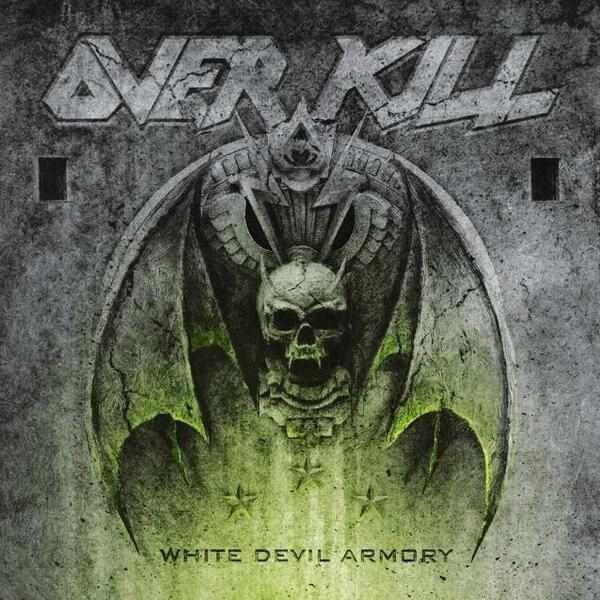
Review of Overkill's White Devil Armory


Overkill may have settled into a certain niche in recent years but you sure as hell can't call them lazy. 2010's Ironbound was a revitalizing kick in the pants and 2012's The Electric Age successfully kept the momentum going, even if the band has since referred to the latter as being a stylistically limited release. Now with the fascinatingly titled White Devil Armory, Overkill has promised a more dynamic album that still stays true to their lifelong signature sound.

On its most basic points, you won't find too many things on here that weren't already done on the two albums before it. None of the songs stray too far from the standard fast-paced guitar runs, D.D. Verni's bass and backing chants still complement Ron Lipsicki's constant blasts, Blitz's relentless rasp gives songs like "Armorist" and "Pig" their fire, and the sound is wrapped up with the same crispy, trebly production job. Part of me is starting to miss the bottom heavy Immortalis tone but the sound still matches the writing and performances nicely.


While the songs on here do secure themselves in the thrash metal realm, the band has made due on their promise of a more varied release than its predecessor. You won't find a complete out-of-speed experience like "Black Daze" on here but each track does have a certain quirk or tempo change that keeps things from sounding the same. It is most apparent in the second half thanks to the vocal effects on "Another Day To Die" and the epic flair of "Freedom Rings" and "In The Name," though the Necroshine-esque shifts on "Bitter Pill" make it the biggest deviation and strongest highlight.


But with the shifts comes the feeling that they still could've done a little more with them. The writing has a lot of effort put it but it is a little hard to find a "Bring Me The Night" or "The Head And Heart" on here. The bonus cover of Nazareth's "Miss Misery" with Accept's Mark Tornillo does raise a few questions; it's a cool idea but I can't help but wonder if they considered having him on one of the album's main tracks. Perhaps the reaction to their Randy Blythe collaboration scared them off...

Overkill's seventeenth full-length fits right in with the other pieces of the "Ironbound Trilogy" and may be about even with its predecessor in terms of quality. It took a few extra listens to get into than usual and still leaves one wanting more, but it's hard to imagine things any other way. Definitely a solid recommendation and a well deserved entry into the Billboard's Top 40.

Highlights:
"Armory"
"Pig"
"Bitter Pill"
"Freedom Rings"
"In The Name"

Tuesday, July 15, 2014

Review of Judas Priest's Redeemer of Souls


With all the hubbub that has already built up over the release of Judas Priest's seventeenth studio album, I can't help but find parallels between it and 1997's Jugulator. A lot of pressure has been on the band as Redeemer of Souls is their first album since the controversial Nostradamus came out in 2008, the first to feature guitarist Richie Faulkner in place of founding shredder K. K. Downing, and is here amidst a three year strong "farewell tour" and rumors of a hiatus. But like Jugulator, it's a flawed effort that does make for a fun listen.

In a way similar to 2005's Angel of Retribution, Redeemer of Souls serves as a sampler of the different sounds that Priest's tried out through their career. The classic 80s albums are predictably referenced the most as the band often aims for accessible rockers when they aren't trying to rewrite Painkiller. There are a few exceptions to the rule as "Crossfire" rides a 70s blues groove, the plodding "Secrets of the Dead" invokes Rob Halford's Fight project, and "Sword of Damocles" is a theatrical waltz that sounds like something Blind Guardian would've put together.


Of course, the band members' performances appear to be the biggest point of contention and they are indeed a mixed bag. Halford can still deliver when he's in his comfort zone and Faulkner adequately keeps up with Glenn Tipton, but the higher screams do show their age and the production does make the guitars sound a little stilted at times. They do fare better than the rhythm section as usual with bassist Ian Hill being as invisible as ever and drummer Scott Travis offering a heavy but rather downplayed performance.

Thankfully the songwriting keeps things from straying into bargain bin territory. Things start off strong with "Dragonaut" serving as a high speed opener and the title track offering an upbeat groove reminiscent of "Hell Patrol." From there, "Halls of Valhalla" and "Battle Cry" are borderline epics in the vein of The Headless Children-era WASP, "Down in Flames" is a light but energetic rocker, and "Beginning of the End" serves as an airy closer. The bonus tracks are also pretty solid as "Snakebite" has an AC/DC swagger and "Never Forget" is an emotional swan song for Priest's legacy even if it is a bit saccharine...


Overall, Redeemer of Souls is a respectable outing if this does turn out to be Priest's last effort but is still pretty decent if it doesn't. Angel of Retribution was a little better at the sampler approach but there are plenty of songs to like even if there isn't an honest to god classic among them. I'd check in with Accept or Queensryche if you want to see 80s metal still going strong but this is certainly better than Nostradamus...

Highlights:
"Dragonaut"
"Halls of Valhalla"
"Sword of Damocles"
"Down in Flames"
"Battle Cry"

Sunday, May 25, 2014

The Psychic Shorts Nuzlocke Challenge, Part 5: The Final Risks

So the fifth and final installment of my very first Nuzlocke Challenge is one that may be slightly anticlimactic. While the trek through Victory Road and the battles at the Pokemon League are considered to be the hardest parts of the game and the ultimate test of a trainer's abilities, they still aren't that nerve wracking if your team is diverse and strong enough. I had a few concerns with the approach since my team was a couple levels lower than they usually are when I play this game, but I still successfully pulled through.

 Victory Road is always my favorite part of the game due to its trainers posing a bigger challenge than those before due to their higher leveled, more diverse teams and this run was certainly no exception. I had a few close calls with a couple battles here and there but I got my Pokemon to the levels where I would be more confident in my clashes against the Elite Four. I even knocked Moltres out for sport and captured an Onix which I nicknamed MagicSnake.
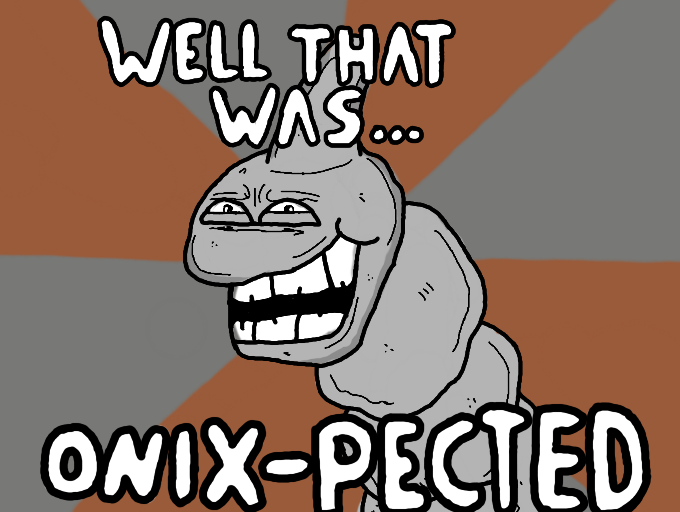
Too bad I didn't find it in the Rock Tunnel. Could've summed up this entire challenge

Once I made it to the Indigo Plateau, I decided to suspend the Nuzlocke rules for the sake of finishing the game in one round with the best Pokemon in my roster. With that in mind, I definitely took a few more risks than I had anytime prior to this and a few surprising battles came out of it. This was also where I didn't worry so much about keeping my Pokemon's levels even, allowing me to see who would become the strongest links.

The battle with Lorelei's Ice types is usually the one I have the hardest time with on my usual files but this didn't seem to be the case with this run. Lucky and Sparkles were the only two Pokemon I really needed as Sparkles took out her Dewgong, Cloyster, and Slowbro while Lucky went after her Jynx. Lucky was eventually felled by Lorelei's Lapras but Sparkles quickly made short work of it. With that, I revived Lucky and moved to the next challenge.

Bruno, the Fighting type master, is easily the weakest member of the Elite Four, especially if you have a strong Flying or Psychic handy. But only wanting to use Elsa sparingly, I thought this one would be a little trickier than usual. However, two of my more overlooked Pokemon pulled through as Weed destroyed an Onix and his Hitmonchan while Roid Rage finished off the other Onix and surprisingly held his own against his Machamp.

I already made the Onix joke so here's a picture of a Mudkip. I heard you leik them.

With the absence of a strong Pokemon or two that knew Psychic and Ground type attacks (Kooopaaaa...), Agatha was most definitely the trickiest Elite Four member on this run as I didn't have a definite advantage against her. Sparkles led the way against one of her Gengars, Roid Rage took out her Golbat and Haunter, Weezy defeated her Arbok when Roid Rage was knocked out, and a bit of paralysis from Sparkles contributed to the fall of her last Gengar. Overall, a little trickier than usual but still pretty manageable.

Lance was the final member to the Elite Four to fight and another one that I normally don't find too challenging since Pokemon with a strong Ice attack or two are easy to come by. Sparkles destroyed Gyarados with a single Thunderbolt, Weezy knocked out his two Dragonairs but was defeated by Aerodactyl's Bite attack, Sparkles jumped back in to take Aerodactyl out, and his Dragonite was vanquished by Elsa's Ice Beam.

Then in true Gen I fashion, Asshat was the game's last opponent and the battle with him may have been the most personal I've fought since I played this game for the very first time. Lucky beat Pidgeot with a single Thunder but lost to Alakazam, Elsa avenged it and Koopa by Flying after Alakazam, Roid Rage barely won out against Rhydon, Sparkles made short work of another Gyarados, Roid Rage had to cover for Weezy after it lost to Arcanine, and Weed defeated Venusaur in one of the game's most drawn out battles. And then, once the dust cleared, Professor Oak came.

Sorry, couldn't resist.

So not wanting to bother with the whole Mewtwo debacle, I have decided to end my quest here as I almost always do. Upon finishing the Nuzlocke Challenge, I find myself feeling a little richer for the experience and wishing that the game had gone on for longer. It would've been nice if I had saved a Pokemon or two but the team I ended up with was certainly a strong one and came through in a lot more ways than I would've expected.

A slightly worn-out game served as more than just a nostalgia-based reward system and it even got me to think about a few philosophical points beyond the usual Pokemon theories. It just may end up being the only way I ever play through this game but I probably won't be blogging too much about any of my future Nuzlocke experiences.

Unless I can shell out more Pokemon memes. Everyone loves Pokemon memes.

The Hall of Famers:
Weed the Vileplume, Level 46
Roid Rage the Machoke, Level 47
Sparkles the Jolteon, Level 49
Lucky the Chansey, Level 46
Weezy the Seadra, Level 46
Elsa the Articuno, Level 50

The Fallen:
Charles the Zubat, Level 17
Madame the Butterfree, Level 24
Cheater the Kadabra, Level 24
G-G-Ghost the Haunter, Level 38
YouFatFuck the Snorlax, Level 30
King the Nidoking, Level 40
Jazz the Koffing, Level 31
Koopa the Blastoise, Level 44

On Reserve:
FourChan the Hitmonchan, Level 30
Scramble the Exeggutor, Level 25
Lapras the Lapras, Level 15
Miracles the Magneton, Level 32
Alfred the Tentacool, Level 10
Lord Helix the Omanyte, Level 30
Azagthoth the Kangaskhan, Level 61
MagicSnake the Onix, Level 39