Friday, October 9, 2015

Review of Dopethrone's Hochelaga

It can be tricky to determine the long-term fate of a clone band. Most of them fade into oblivion after a few releases but a few may outgrow the dependency on their influences and come into their own sound. Four albums into their career, Montreal’s Dopethrone doesn’t stray too far from bottom heavy stoner doom but may be performing it better than the band who inspired them are nowadays.

As expected from the name, Dopethrone is about as close as one can get to the old school Electric Wizard sound. The riffs are slow and sludgy, the structures are long and meandering, and the occult and drug lyrical themes are topped with a constant array of old movie samples. These elements are best exemplified by “Vagabong,” a slow burn that revolves around a riff progression not unlike that of “Funeralopolis.”

But even with the obvious homages and occasional lifts, I’m not sure if Electric Wizard ever sounded this harsh. The psychedelic influences are nowhere near as prominent and the shrieking vocals have more in common with Dixie Collins of Weedeater than Jus Oborn’s mournful drones. The riffs are also not quite as catchy though segments such as the bass driven breakdown on “Dry Hitter” are pretty memorable.

Overall, Dopethrone’s fourth album is a solid alternative for fans that have grown weary of the recent efforts by the old guard. Their songwriting isn’t as definitive as those bands’ best but the rougher sound gives these tracks a satisfying edge. I haven’t heard any of the band’s other records yet but I imagine there isn’t too much reason to stray from the course they’re on.

Highlights:
“Vagabong”
“Scumfuck Blues”
“Dry Hitter”

“Bullets”

Wednesday, October 7, 2015

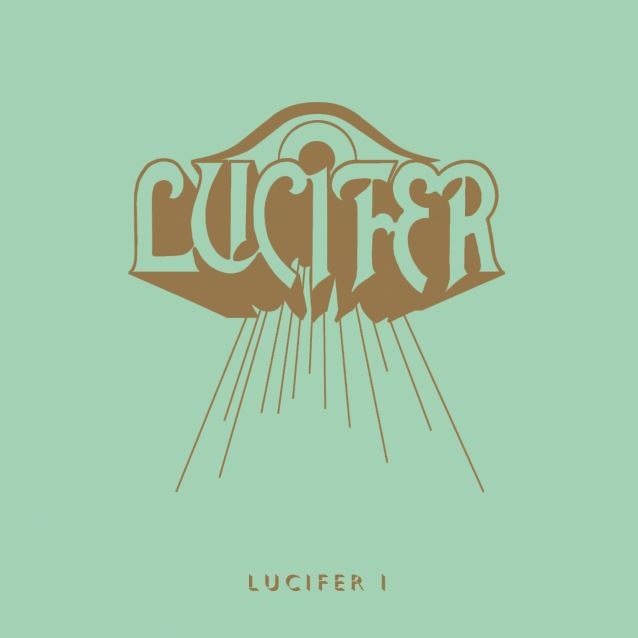
Review of Lucifer's Lucifer I

When doom legends Cathedral disbanded in 2013, it was a tragic but understandable move as it ept the band from running its course like so many of their peers. Fortunately, its members are finding ways to stay creative in the aftermath. Guitarist Gaz Jennings in particular has kept busy playing with Death Penalty and recently forming Lucifer with The Oath's vocalist Johanna Sadonis. Thankfully the music here is much stronger than the generic moniker would imply.

Stylistically, Lucifer has a fair amount in common with Cathedral and seems to operate as a spiritual successor. The presentation isn't quite as gritty but the riffs have a similarly heavy tone and are just as groove friendly. The songwriting doesn't get as off the wall either but Lucifer preserves Cathedral's penchant for variety quite nicely. The opening "Abracadabra" and "White Mountain" have driving riffs and upbeat vocal lines, "Sabbath" and "Morning Star" are packed with sprawling doom riffs, and the verses of "Izrael" are scaled back in a way that reminds one of Pentagram's more mellow moments. It might be playing it safe at times but nothing feels watered down by any means.

Predictably, the vocals do work to make this group distinct from its predecessor. While Sadonis's voice can feel a little stilted at times, she has a mystical tone that works well in every environment presented. Fortunately it never feels too gimmicky and the guitars feel just as prominent and arguably more versatile.

Overall, Lucifer's debut is a strong first impression that gets better with every listen. The callbacks to classic doom make it a safe purchase for seasoned fans but the song variety helps it stand out on its own merits. One can hope for future evolution on future efforts and I may need to give The Oath's album an attentive listen.

Highlights:
"Abracadabra"
"Izrael"
"Sabbath"
"Morning Star"

Tuesday, October 6, 2015

A Look Back at Black Sabbath's Headless Cross

Though it was barely acknowledged when first released in 1989, it's hard to emphasize just how significant Headless Cross is in the grand scheme of Black Sabbath's career. The Eternal Idol had previously explored a darker sound and introduced what was left of the fanbase to singer Tony Martin, but Headless Cross perfected the style and pushed its strongest elements to even further heights. It wasn't a monolith statement but it could be regarded as the first true Sabbath album since the early 80s.

For starters, there hadn't been a Sabbath lineup that showed off this much talent and chemistry since The Mob Rules. The production is clearer than The Eternal Idol's had been, giving Goeff Nicholls's keyboards room to provide some admittedly dated atmosphere and allowing drummer Cozy Powell's hard hitting barrages to give extra aggression to Iommi's signature riffs and solos. Tony Martin also seems to be more comfortable this time around, showing off a wide range and dramatic character that was previously limited by a need to match Ray Gillen. Bassist Lawrence Cottle also manages to stand out on the title track despite only playing on this as a session member.

The band's doomy power glam template also allows for varied songwriting. The title track and "When Death Calls" are easily the album's strongest tracks as the former recycles the anthemic march of "Heaven And Hell" to great effect while the latter has some climactic tempo changes and soaring vocals. Elsewhere, "Devil And Daughter" borders on speed metal, "Black Moon" effortlessly alternates between blues and power metal, and the closing "Nightwing" serves as a grand but ominous ballad.

The lyrics also opt for a darker tone though this has become a point of contention for some listeners. In contrast to the occult warnings of Sabbath's classic era, Headless Cross is much less subtle and takes cues from King Diamond. The results are about as campy and may be too cheesy for those used to grimmer insights. If anything, pointing out all the times Martin ad libs and references Satan would probably make for a fun drinking game...

Like any good 80s slasher flick, Headless Cross is a little too dated to have the scare factor it may have once had but its excellent performances give it a timeless appeal. Black Sabbath feels renewed here and the album has its share of classics even if they are frequently dwarfed by the band's more famous ventures. It's a shame that this didn't put them back into mainstream relevance but subsequent releases were enough to prove the band's staying power.

Highlights:
"Headless Cross"
"When Death Calls"
"Black Moon"
"Night Wing"

Friday, October 2, 2015

Review of Witchdoctor's Moon Watcher

2001: A Space Odyssey is an undeniable staple of pop culture but it is rather rare to ever see it be referenced in the world of heavy metal. The prologue's tale of the apes and the monolith is particularly iconic and has provided much food for thought over the years. While the scene is the subject of only one song on their debut studio effort, it does a pretty good job of describing the band's overall sound and intentions.

While Witchdoctor is best classified as epic doom metal but there is more to the Indianapolis group than mere Candlemass worship. The performances are melodic and sophisticated but there is a savage undercurrent that shows influence from such groups as High On Fire. The guitar riffs play like rallying battle cries when they aren't bludgeoning you to death, the loose structures utilize different tempos, the lyrics speak of fantasy and uncivilized warfare, and the contrasts between operatic wails and vicious shouts sound like a caveman that has just learned to sing but is still trying to control it. The album basically sounds like what would happen if the monolith made the apes play doom metal after killing each other...
And with Moon Watcher being thirty-five minutes and six songs long, one of which being a two and a half minute instrumental, there isn't any room for filler. The first three songs may be the best on display as "The Gathering" shows off some hair raising guitar leads after a building introduction and the title track has a series of intricate yet catchy riffs. The second half can't be denied either as "DMLKT" offers a particularly epic refrain. It would've been great to see another track or two but nothing here feels underdeveloped.

Overall, Witchdoctor's debut just may be one of the most promising to be seen in the doom community. The more subtle incorporation of their influences make them tricky to stylistically pinpoint than most and the balance of class and aggression should endear them to just about any doom fan out there. One can only wonder which path they will choose on future efforts.

Highlights:
"The Gathering"
"Pathways"
"Moon Watcher"

Friday, September 25, 2015

Review of Symphony X's Underworld

Symphony X has taken their sweet time putting together the albums that have come out since The Odyssey's release in 2002. A slew of side projects and higher profile tours has kept the band members busy along with guitarist Michael Romeo's notorious perfectionism. The frankly similar sounding records have led some to wonder if the band was also starting to run out of ideas. The well still hasn't run dry on Symphony X's ninth studio effort but there are a few causes for concern.

For the most part, Underworld's style is about the same as it was on Paradise Lost and Iconoclast. The tone is as dark as ever and the instrumentation is still largely driven by Romeo's aggressive, downtuned riffs with the odd symphonic flourishes here and there. However, there is a sense of restraint that hasn't been seen on the album before it as the vocals aren't as rough and the songwriting is more melodic. The aim may have been to make a more accessible effort but the approach ironically keeps even the heaviest of songs from hitting as hard as they could.
What keeps this album's head above water is the still great songwriting. While nothing here lives up to the bar set by the awe inspiring "Overture" and a bunch of the pre-choruses sound alike, every song on here manages to be memorable. "Nevermore" and "Without You" proved to be smart single choices due to their solid hooks, "Kiss Of Fire" and "In My Darkest Hour" come close to matching the heaviness of past efforts, "Swan Song" makes for a sweet ballad, and the nine minute "To Hell And Back" and the closing "Legend" channel classic Dream Theater with their upbeat tempos and energetic keyboards.

But like the self-titled Dream Theater album, Underworld starts off excellent but has ideas that leave less of an impact than usual. The songwriting and strong performances still make it an enjoyable listen but it is mere prog metal comfort food compared to their finest outings. I wouldn't call this a disappointment but a new direction may soon be called for.

Highlights:
"Nevermore"
"Kiss Of Fire"
"Run With The Devil"
"Swan Song"
"Legend"

Tuesday, September 22, 2015

Review of Ghost's Meliora

Ghost may be the best modern example of the band whose success is owe almost entirely to their gimmick but you can't accuse them of being lazy. Their retro rock aim has divided listeners but they put obvious care into their arrangements and have given each of their full-lengths a distinct identity. Ghost's third album isn't an exception to this rule but serves as an overall definition of their signature sound.

While Infestissumam's dramatic foray into symphonic rock was a big leap from the humbler doom pop of Opus Eponymous, Meliora works as a compromise between the two styles. True to the Nameless Ghouls' claims, this is a more riff-driven album as the keyboards and choirs are scaled back and the guitars and even bass get to shine on heavier tracks such as From The Pinnacle To The Pit." However, the theatrics still have their place with the upbeat "Absolution" serving as this album's answer to "Year Zero" and "Deus In Absentia" bringing the choir back for an ominous finale.

And even with this blending at work, the band still stumbles on new ideas to play with. "He Is" may be the most interesting track of the lot due to its gentle acoustic guitar and uplifting vocals giving it a Satanic gospel feel that your mom will love until she realizes what the lyrics are about. On the flip side, the faster riffs and tensely whispered vocals on "Mummy Dust" result in Ghost's most extreme song to date and the "South of Heaven" musings that bookend "Cirice" give the song a forboding tone that Slayer themselves can no longer replicate.
Of course, this album still has its share of flaws. It is a minor nitpick but the two interludes are rather pointless compared to those on past efforts and their awkward positions in the track listing reinforce the idea of them being undeveloped fillers rather than atmospheric boosts. In addition, those don't like Ghost's vocals will remain unconvinced as Papa Emeritus III's voice is just as thin as his "predecessors."

I don't think Ghost will ever top their debut but Meliora may be their best representation. It may better cater to the tastes of those who feel they reached too far on Infestissumam and those new to the band may find this to be a pleasant gateway to explore what the band is all about. It wouldn't surprise me if they stuck to this style but I fully expect to expand even further with future efforts. Let's just hope the gimmick doesn't eclipse things too much...

Highlights:
"From The Pinnacle To The Pit"
"Cirice"
"He Is"
"Absolution"

Friday, September 18, 2015

Review of Pentagram's Curious Volume

As everyone knows by now, 2011's Last Rites and the accompanying Last Days Here documentary depicted Pentagram vocalist Bobby Liebling getting off the drugs, crawling out of his parents' basement, and restoring his band's relevancy in the modern doom community. Misfortune has plagued the man in the four years it's been since that album's release but the persisting exposure and return to Peaceville Records are enough to suggest that the band's fifteen minutes may not be up yet. Most miraculously, the lineup changes are minimal by Pentagram standards as drummer "Minnesota" Pete Campbell was brought on, guitarist Victor Griffin left but came back on in time to record the album, and bassist Greg Turley stayed on all the while.

Like the last couple albums before it, the sound of Curious Volume draws more from the classic 70s style than the heavy doom of their first couple full-lengths. But while Show 'Em How tried its hand at energetic rock and Last Rites offered a more contemplative outlook, the album has a noticeably gritty style in comparison. The reflective nature can still be felt in spots, particularly on the closing "Because I Made It," but most of the songs on here have a much more driving nature. This is best seen on "Misunderstood" as its upbeat protopunk riffs make it one of the band's fastest songs since "Drive Me To The Grave."

This subtle shift in style is also reflected in the musicianship. While there aren't too many classic riff driven monsters on here, Griffin's guitar has a rough edge that has arguably not been seen since the days of Be Forewarned. The drums have the typical loose feel and Liebling's vocals don't stray too far from the haggard, lower pitched delivery of Last Rites. This may be the only sound that his voice can sound good with but I'm sure there's an alternate universe where he went down the Ozzy Osbourne route of vocal processing and overcompensation. I'm glad I don't live in that universe.
And true to all Pentagram efforts, Curious Volume is packed with variety. While the start-stop riffing on "Lay Down And Die" starts things off on a slightly awkward note, things pick right back up with the "Black Night" style swing on "The Tempter Push" and "Sufferin'" utilizes the tempo later on to entertaining effect. First Daze Here fans should also be pleased by the inclusion of the bass heavy "Earth Flight" while doom fans will go for the downtrodden grooves on songs such as the title track and "Close The Casket."

Amidst the various lineup changes and tonal shifts that have plagued Pentagram through their forty year career, they've been on a solid plateau in terms of songwriting since Be Forewarned. The same could be said for Curious Volume. It doesn't rise too far above any of their previous efforts but it fits right in with them and may be their most authentic sounding effort since their heyday. Established fans will eat this up and listeners who missed the last couple wouldn't be discouraged from giving this a shot either. No one knows how much Pentagram has left but let's hope they can hang onto Victor Griffin for a while longer.

Highlights:
"The Tempter Push"
"Earth Flight"
"Misunderstood"
"Close The Casket"