Wednesday, October 14, 2015

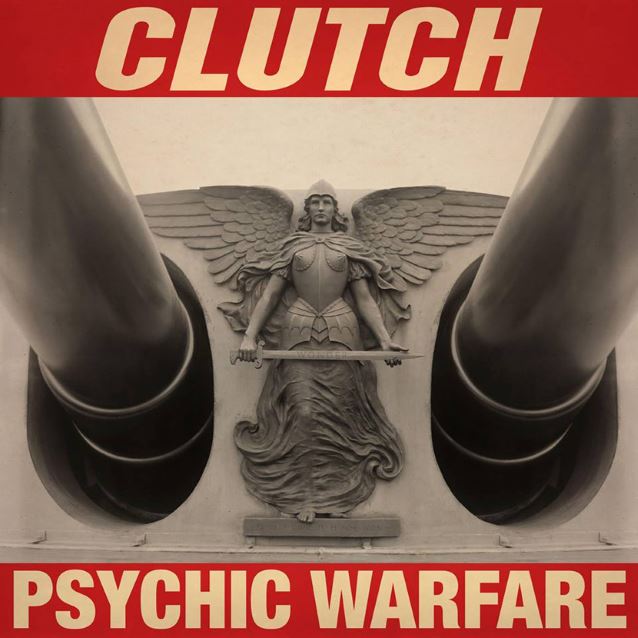
Review of Clutch's Psychic Warfare

When a veteran band becomes famous for having a signature sound, there's a fine line between praising them for sticking to their guns and kissing their asses for merely existing. Clutch hasn't changed in their twenty-five year history but their cult following keeps growing thanks to the band knowing what they're good at and finding clever ways to effortlessly exercising their formula. Their eleventh studio album is no exception to the rule. It's pure rock comfort food but damn it all if this isn't some of the best comfort food you've ever tasted!

As indicated by the short time between releases and an identical production job courtesy of returning producer Machine, Psychic Warfare is pretty much Earth Rocker Part 2. It has the same raw sound and fast pacing and a bunch of songs feel like direct counterparts to the songs off that effort. The high speeds on the opening "X-Ray Visions" and "Firebirds" match the punches of "Earth Rocker" and "Crucial Velocity," the bluesy swing of "D.C. Sound Attack!" lives on with "A Quick Death In Texas," and "Behold the Colossus" has a building gallop in the vein of "The Face." They even reach back a little further as the acoustic-driven closer "Son of Virginia" is a pretty cool rewrite of "The Regulator."
Thankfully none of the songs ever feel like lazy retreads. While songs have similar templates as past tracks, each one has a nice quirk or two that allows them to stand out. This is best illustrated by "Our Lady of Electric Light;" the scaled back instrumentation makes it seem like the album's answer to "Gone Cold" but the transition from "The Doom Saloon" and the percussive shuffle make it a highlight on its own merits. It also helps that the band members' performances are as enthusiastic as ever and that Neil Fallon still delivers plenty of the one liners that are so rarely replicated by their legion of imitators.

In an era where bands like AC/DC and Motorhead make the same album over and over with all of the memorable riffs left behind, it is enlightening to see Clutch continuing to impress listeners by doing the same thing. It not only avoids sounding like a pale imitation of Earth Rocker but may actually be more consistent. Old fans will count this as another classic to add to the Clutch canon and newbies are recommended to try this as their first listen. The bands of their generation and older who are currently riding the nostalgia circuit have a lot to learn.

Highlights:
"X-Ray Visions"
"A Quick Death In Texas"
"Our Lady of Electric Light"
"Behold The Colossus"
"Son of Virginia"

Tuesday, October 13, 2015

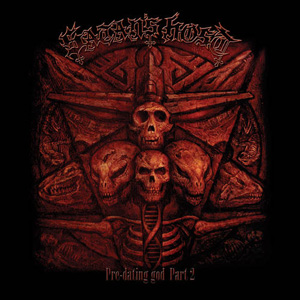
Review of Satan's Host Pre-dating god Part 2

To be perfectly honest, I’m still not sure why Satan’s Host decided to split their latest album into two parts. The style doesn’t change too much between the discs and the runtime is just under eighty minutes when you put them together. It could be argued that it keeps the listener from getting too overwhelmed by the sheer amount of material. Thankfully the quality is high and the second half of Pre-dating god hits as hard as the first.

With that in mind, it isn’t too surprising to see this album be cut from the same cloth as its counterpart. The guitars and drums still operate at a near constant blast, the vocals jump between the growls and high pitched wails, and the song structures aim to be elaborate and ominous. It could be argued that this half is slightly more melodic with “Fanning the Flames of Hell” daring you to match Conklin’s cries during the choruses and “Descending In The Shadow of Osiris” takes the balladry a step further than “After The End” did on part 1.
The hooks also manage to still be pretty memorable. The chorus on “As The Dead They Sleep” comes dangerously close to grating on the nerves but the building verses keep it strong and the appropriately serpentine grooves on “Lady ‘n The Snake” provide a nice mid-tempo contrast before returning to faster grounds in the second half. There are times when certain songs feel a bit too long or venture too far from their original ideas, but the tangents are rarely unwelcome.

With it having a couple more songs to work with, Pre-dating god Part 1 may be the better half but the strong songs on Part 2 make it impossible to have a truly satisfying experience without it. It is refreshing to see a band that’s been around as long as Satan’s Host still releasing consistent material at such a fast rate. One hopes they won’t burn themselves out too soon but one could still imagine them going out gloriously in such a scenario.

Highlights:
“Fanning The Flames of Hell”
“Soul Wrent”

“Lady n' The Snake"

Monday, October 12, 2015

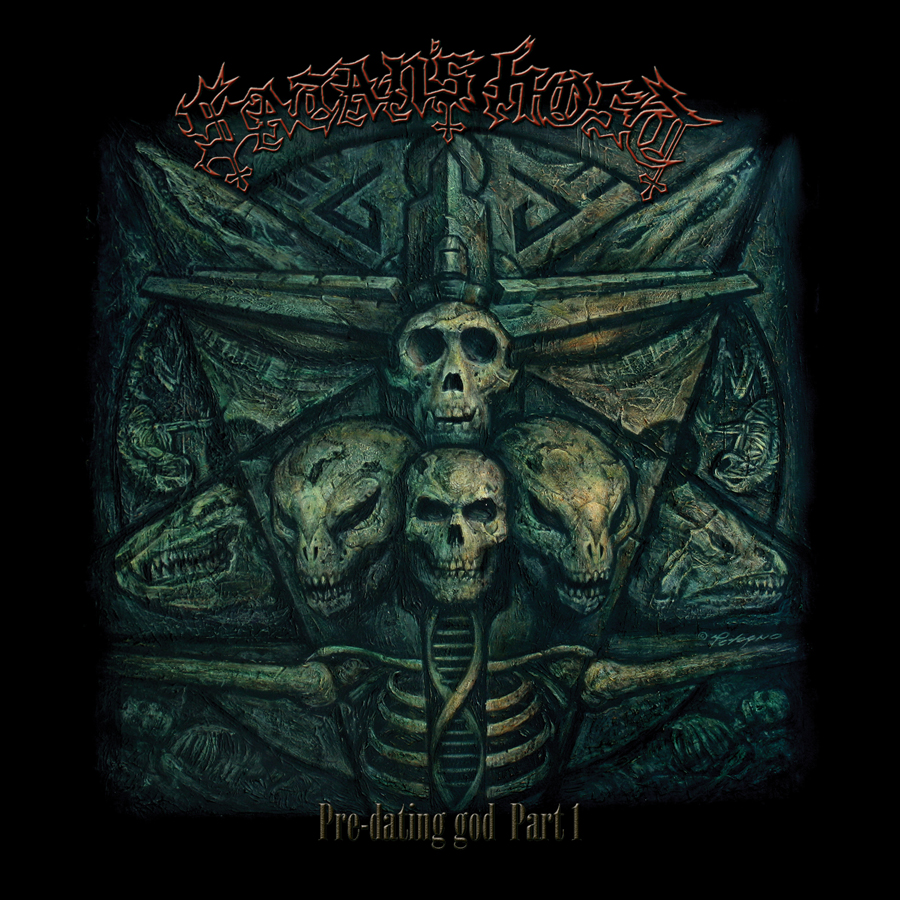
Review of Satan's Host Pre-dating god Part 1

Whether they’re playing power metal, black metal, or something in between, there’s no denying that Satan’s Host has been pretty ambitious for a band their age. Now on the latest phase of the reunion with original vocalist Harry Conklin, the band has taken the Use Your Illusion route by producing an album split into two halves. The results aren’t exactly distinct from one another but there’s still high quality to be found.

When considering how prolific Satan’s Host has become in recent years, it isn’t too surprising to see them slide into a set style. The blackened power metal of the last couple efforts is at full force as Patrick Evil's guitars utilize tremolo picking and other extreme techniques, Evil Little Hobbit's drums constantly blast, and the vocals cover everything from Conklin’s signature bellows to King Diamond style wails. However, this album and part 2 are more melodic and the harsher vocals aren’t used as often.

Both parts of Pre-dating god go through the same songwriting tropes and are about even in quality, but Part 1 may be the stronger installment. “Embers Of Will” is the strongest track thanks to an ominous middle section reminiscent of Mercyful Fate while the choruses on songs like “Hell’s Disciples” and the title track help keep the elaborate structures memorable. The closing take on Grim Reaper’s “See You In Hell” is also worth noting. It might not have the same evil aesthetic but the amped approach makes it sound as good as it does on paper and you can tell they had a lot of fun with it.

I fail to see how one could only get one of the two, but Pre-dating god Part 1 may be the one to go for in such a situation. It doesn’t stray too far from the band’s recent efforts and has a good mix of melody and aggression for established fans. The two parts aren’t a bad recommendation for newer fans but one may want to go for one of their more solid efforts first.

Highlights:
“Embers of Will”
"Valley of Blood"
“Pre-Dating God”
“See You In Hell”

Friday, October 9, 2015

Review of Dopethrone's Hochelaga

It can be tricky to determine the long-term fate of a clone band. Most of them fade into oblivion after a few releases but a few may outgrow the dependency on their influences and come into their own sound. Four albums into their career, Montreal’s Dopethrone doesn’t stray too far from bottom heavy stoner doom but may be performing it better than the band who inspired them are nowadays.

As expected from the name, Dopethrone is about as close as one can get to the old school Electric Wizard sound. The riffs are slow and sludgy, the structures are long and meandering, and the occult and drug lyrical themes are topped with a constant array of old movie samples. These elements are best exemplified by “Vagabong,” a slow burn that revolves around a riff progression not unlike that of “Funeralopolis.”

But even with the obvious homages and occasional lifts, I’m not sure if Electric Wizard ever sounded this harsh. The psychedelic influences are nowhere near as prominent and the shrieking vocals have more in common with Dixie Collins of Weedeater than Jus Oborn’s mournful drones. The riffs are also not quite as catchy though segments such as the bass driven breakdown on “Dry Hitter” are pretty memorable.

Overall, Dopethrone’s fourth album is a solid alternative for fans that have grown weary of the recent efforts by the old guard. Their songwriting isn’t as definitive as those bands’ best but the rougher sound gives these tracks a satisfying edge. I haven’t heard any of the band’s other records yet but I imagine there isn’t too much reason to stray from the course they’re on.

Highlights:
“Vagabong”
“Scumfuck Blues”
“Dry Hitter”

“Bullets”

Wednesday, October 7, 2015

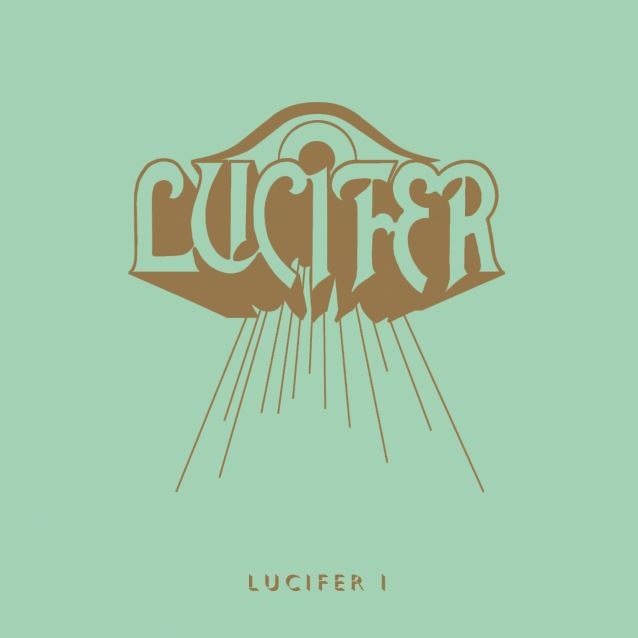
Review of Lucifer's Lucifer I

When doom legends Cathedral disbanded in 2013, it was a tragic but understandable move as it ept the band from running its course like so many of their peers. Fortunately, its members are finding ways to stay creative in the aftermath. Guitarist Gaz Jennings in particular has kept busy playing with Death Penalty and recently forming Lucifer with The Oath's vocalist Johanna Sadonis. Thankfully the music here is much stronger than the generic moniker would imply.

Stylistically, Lucifer has a fair amount in common with Cathedral and seems to operate as a spiritual successor. The presentation isn't quite as gritty but the riffs have a similarly heavy tone and are just as groove friendly. The songwriting doesn't get as off the wall either but Lucifer preserves Cathedral's penchant for variety quite nicely. The opening "Abracadabra" and "White Mountain" have driving riffs and upbeat vocal lines, "Sabbath" and "Morning Star" are packed with sprawling doom riffs, and the verses of "Izrael" are scaled back in a way that reminds one of Pentagram's more mellow moments. It might be playing it safe at times but nothing feels watered down by any means.

Predictably, the vocals do work to make this group distinct from its predecessor. While Sadonis's voice can feel a little stilted at times, she has a mystical tone that works well in every environment presented. Fortunately it never feels too gimmicky and the guitars feel just as prominent and arguably more versatile.

Overall, Lucifer's debut is a strong first impression that gets better with every listen. The callbacks to classic doom make it a safe purchase for seasoned fans but the song variety helps it stand out on its own merits. One can hope for future evolution on future efforts and I may need to give The Oath's album an attentive listen.

Highlights:
"Abracadabra"
"Izrael"
"Sabbath"
"Morning Star"

Tuesday, October 6, 2015

A Look Back at Black Sabbath's Headless Cross

Though it was barely acknowledged when first released in 1989, it's hard to emphasize just how significant Headless Cross is in the grand scheme of Black Sabbath's career. The Eternal Idol had previously explored a darker sound and introduced what was left of the fanbase to singer Tony Martin, but Headless Cross perfected the style and pushed its strongest elements to even further heights. It wasn't a monolith statement but it could be regarded as the first true Sabbath album since the early 80s.

For starters, there hadn't been a Sabbath lineup that showed off this much talent and chemistry since The Mob Rules. The production is clearer than The Eternal Idol's had been, giving Goeff Nicholls's keyboards room to provide some admittedly dated atmosphere and allowing drummer Cozy Powell's hard hitting barrages to give extra aggression to Iommi's signature riffs and solos. Tony Martin also seems to be more comfortable this time around, showing off a wide range and dramatic character that was previously limited by a need to match Ray Gillen. Bassist Lawrence Cottle also manages to stand out on the title track despite only playing on this as a session member.

The band's doomy power glam template also allows for varied songwriting. The title track and "When Death Calls" are easily the album's strongest tracks as the former recycles the anthemic march of "Heaven And Hell" to great effect while the latter has some climactic tempo changes and soaring vocals. Elsewhere, "Devil And Daughter" borders on speed metal, "Black Moon" effortlessly alternates between blues and power metal, and the closing "Nightwing" serves as a grand but ominous ballad.

The lyrics also opt for a darker tone though this has become a point of contention for some listeners. In contrast to the occult warnings of Sabbath's classic era, Headless Cross is much less subtle and takes cues from King Diamond. The results are about as campy and may be too cheesy for those used to grimmer insights. If anything, pointing out all the times Martin ad libs and references Satan would probably make for a fun drinking game...

Like any good 80s slasher flick, Headless Cross is a little too dated to have the scare factor it may have once had but its excellent performances give it a timeless appeal. Black Sabbath feels renewed here and the album has its share of classics even if they are frequently dwarfed by the band's more famous ventures. It's a shame that this didn't put them back into mainstream relevance but subsequent releases were enough to prove the band's staying power.

Highlights:
"Headless Cross"
"When Death Calls"
"Black Moon"
"Night Wing"

Friday, October 2, 2015

Review of Witchdoctor's Moon Watcher

2001: A Space Odyssey is an undeniable staple of pop culture but it is rather rare to ever see it be referenced in the world of heavy metal. The prologue's tale of the apes and the monolith is particularly iconic and has provided much food for thought over the years. While the scene is the subject of only one song on their debut studio effort, it does a pretty good job of describing the band's overall sound and intentions.

While Witchdoctor is best classified as epic doom metal but there is more to the Indianapolis group than mere Candlemass worship. The performances are melodic and sophisticated but there is a savage undercurrent that shows influence from such groups as High On Fire. The guitar riffs play like rallying battle cries when they aren't bludgeoning you to death, the loose structures utilize different tempos, the lyrics speak of fantasy and uncivilized warfare, and the contrasts between operatic wails and vicious shouts sound like a caveman that has just learned to sing but is still trying to control it. The album basically sounds like what would happen if the monolith made the apes play doom metal after killing each other...
And with Moon Watcher being thirty-five minutes and six songs long, one of which being a two and a half minute instrumental, there isn't any room for filler. The first three songs may be the best on display as "The Gathering" shows off some hair raising guitar leads after a building introduction and the title track has a series of intricate yet catchy riffs. The second half can't be denied either as "DMLKT" offers a particularly epic refrain. It would've been great to see another track or two but nothing here feels underdeveloped.

Overall, Witchdoctor's debut just may be one of the most promising to be seen in the doom community. The more subtle incorporation of their influences make them tricky to stylistically pinpoint than most and the balance of class and aggression should endear them to just about any doom fan out there. One can only wonder which path they will choose on future efforts.

Highlights:
"The Gathering"
"Pathways"
"Moon Watcher"